The goal of this project was to create a cost effective ultralight gaming mouse. There are existing "mice mods" out there for more expensive gaming mice — this one tries to be the cheapest while still delivering quality.
Lightweight Gaming Mouse
An easy to assemble, cost effective DIY lightweight gaming mouse.
Table of Contents
Overview
Research
A growing trend in gaming mice is to make them as light as possible to enable larger, faster motions. There are currently methods of modifying existing mice or 3D printing the entire shell for a variety of models. The goal was to create one using a $10 Lenovo mouse as a donor — making it as accessible as possible.
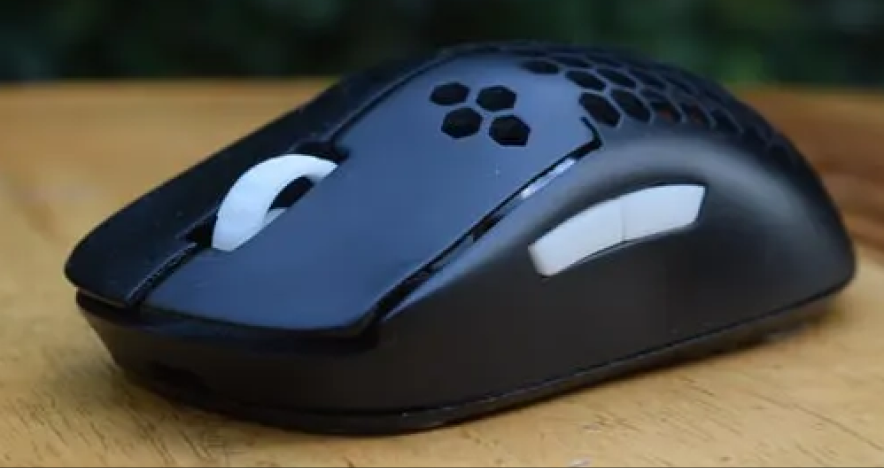
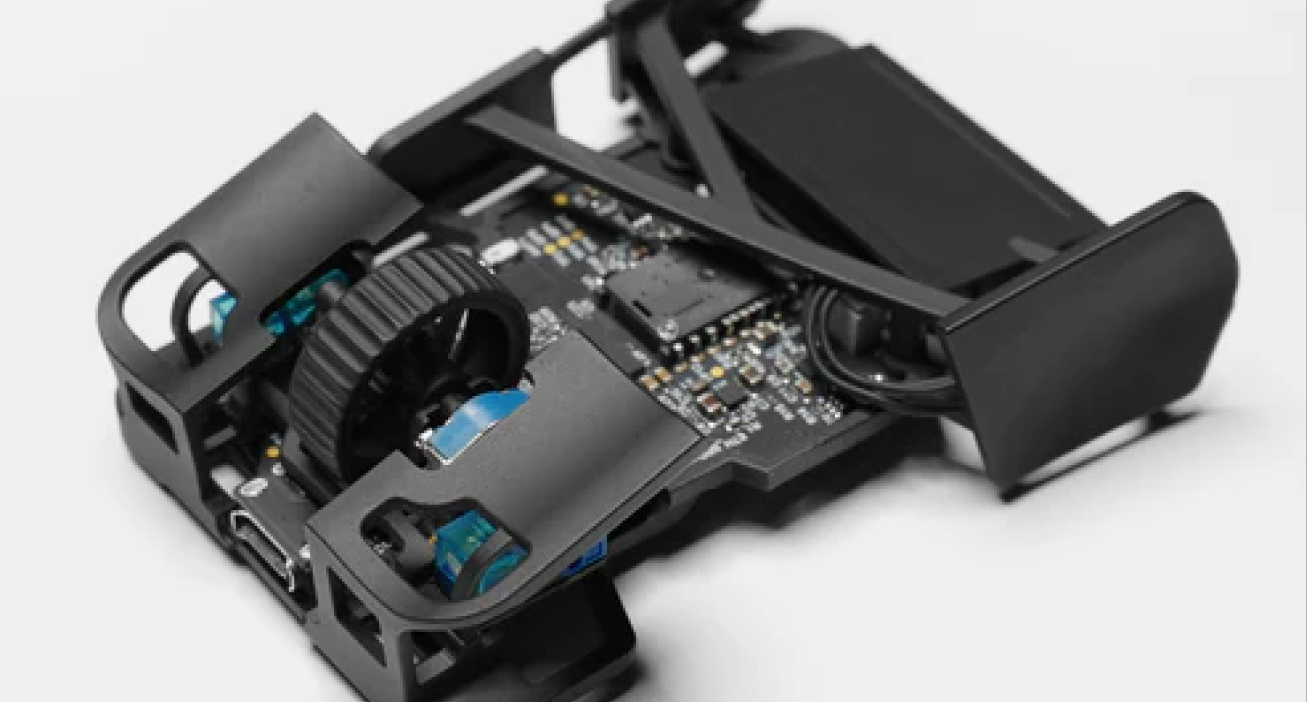

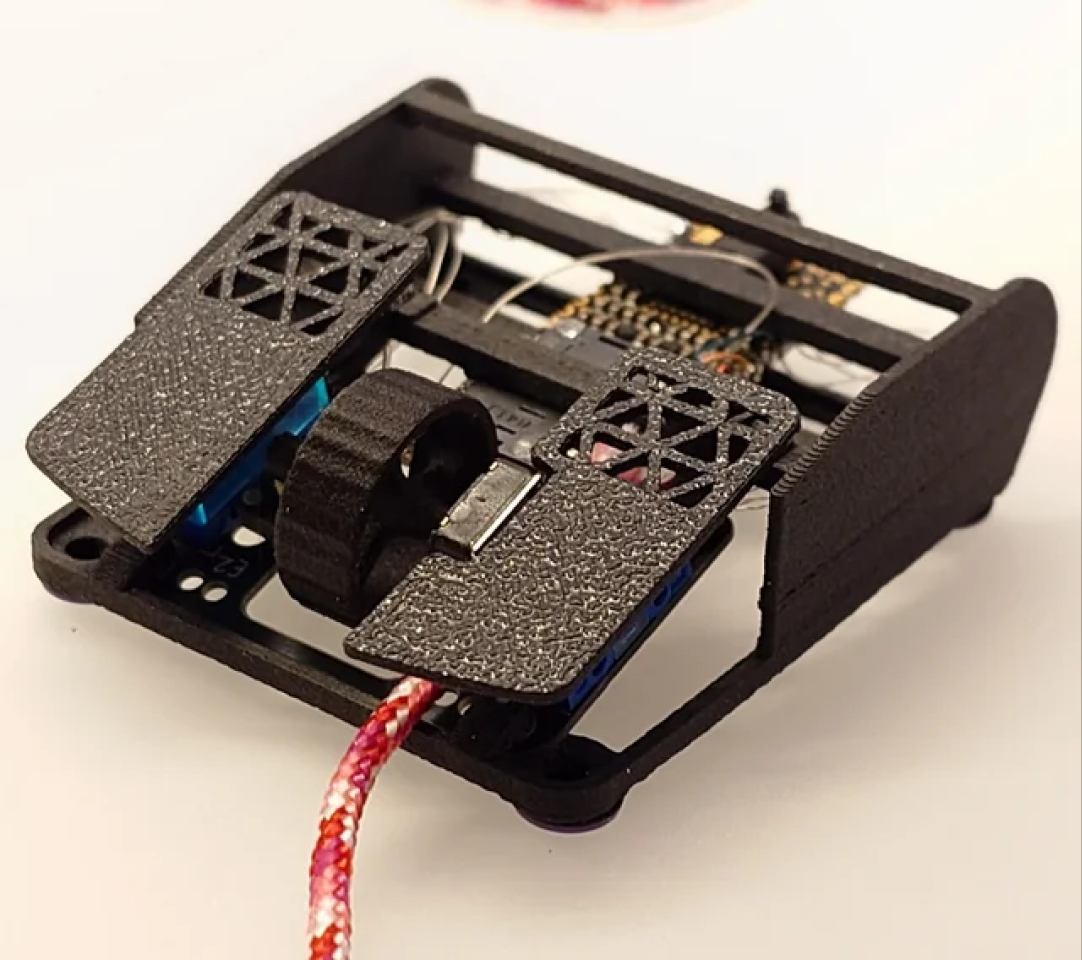
Pictured are custom shells built around existing retail gaming mice internals. The Superlight is a popular Logitech model seen here with its case drilled out to remove weight. Full 3D printed shells take this further. Another popular mod was the Zero Mouse — now produced with its own OEM electronics, but originally a printed case for the Razer Viper.
The final product is an ultralight mouse that can be built for $10 plus filament cost. 3D printing allows forms that would be impossible in traditional manufacturing, and material use is optimized to maximize strength while minimizing mass.
Ideation
When comparing mouse modifications, two main build philosophies emerged. The first preserves the base mouse silhouette and cuts material from the shell — visually clean, but leaves some residual weight. The second takes a bare-minimum approach, building only what's structurally necessary.
Through optimizing the form…
Sketches
The shell is printed in two halves that clip together around the donor PCB, requiring no glue or screws. Wall thickness is kept at 0.8 mm — just enough for rigidity — while internal ribs distribute grip force across the frame so the surface never flexes under load.
Print orientation is optimized so layer lines run along the length of the mouse, maximizing strength in the direction of hand pressure. The result is a shell that weighs under 18 g on its own, bringing the finished mouse to approximately 35 g all-in.

Shell halves before assembly — 0.8 mm walls with internal ribbing
Product Reveal
[Discuss the outcomes of the project. What was the impact? What did you learn?]
[Include any metrics, feedback, or reflections on the project.]
Color, Material, Finish
PLA plastic case. PCB and sensor sourced from a Lenovo donor mouse.
[Include any metrics, feedback, or reflections on the project.]
Accessories
[Discuss the outcomes of the project. What was the impact? What did you learn?]
[Include any metrics, feedback, or reflections on the project.]

[Caption describing the main image]